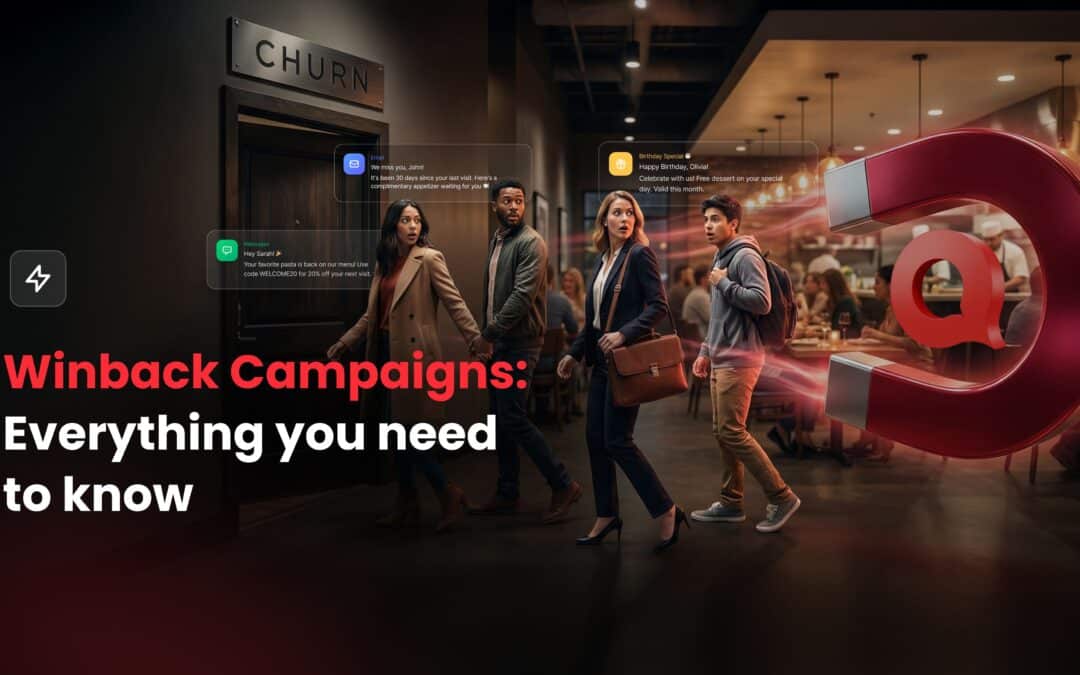
You’ve spent money to acquire them. You’ve delighted them with your product or service. They were part of your tribe. And then… silence.
Every business, from SaaS giants to local coffee shops, faces the same silent revenue killer: customer churn. It’s the leaky bucket syndrome. You pour marketing dollars in at the top, only to watch valuable customers drip out the bottom.
But here’s the intellectual kicker: it costs five to 25 times more to acquire a new customer than to retain an existing one. Yet, most marketing budgets are heavily skewed toward acquisition. It’s illogical. It’s inefficient. And frankly, it’s leaving money on the table.
Enter the Winback Campaign.
This isn't just about sending a "We Miss You" email. It’s about deploying a strategic, data-driven system to re-engage lapsed customers, remind them of your value, and pull them back into your revenue stream.
This is everything you need to know to build a winback engine that actually works.
What is a Winback Campaign?
A winback campaign is a targeted marketing strategy designed to re-engage customers who have stopped interacting with your brand. These are customers who have purchased from you before but have gone "dormant"—meaning they haven't made a purchase, opened an email, or logged in for a specific period.
It’s a rescue mission for your revenue.
Why Should You Care? (The Math)
Let’s look at the data. According to Harvard Business Review, increasing customer retention rates by just 5% can increase profits by 25% to 95%.
Why? Because lapsed customers already know you. You don’t need to educate them on who you are or build trust from scratch. You just need to remind them why they liked you in the first place.
The Psychology of the "Lapse"
Before you send a single email, you need to understand why they left. It’s rarely personal. Usually, it falls into one of three buckets:
- They Forgot: Life got busy. Your competitor made a noise. You simply slipped their mind.
- They Had a Bad Experience: A slow delivery, a rude server, or a bug in the software.
- They No Longer Need You: Their circumstances changed (e.g., they moved away, or their business needs evolved).
Your winback strategy must address the first two. (The third group? Let them go. Focusing on them is a waste of resources.)
Step 1: Define "Dormant"
You can’t win back a customer if you don’t know who they are. The definition of "dormant" or "at-risk" varies wildly by industry.
- Coffee Shop: If they haven't visited in 30 days, they’re gone.
- SaaS Platform: If they haven't logged in for 60 days, panic.
- Mattress Retailer: If they haven't bought in 5 years... well, that’s actually normal.
Step 2: Segmentation is Your Superpower
Do not—I repeat, do not—send a generic "Come back!" blast to everyone. That is lazy marketing.
Segment your lapsed customers based on their previous value to your business:
- The VIPs (High Value): These are your whales. They spent a lot and visited often. They deserve your best offer and highest attention.
- The Regulars (Medium Value): Good customers who were consistent. They need a nudge.
- The One-and-Dones (Low Value): They bought once and vanished. Don’t break the bank trying to win them back.
Pro Tip: Use an RFM (Recency, Frequency, Monetary) model to automatically segment these groups. Platforms like Qubriux use AI to do this for you, identifying exactly who is "at-risk" before they are fully gone.
Step 3: Crafting the Campaign (The Content)
A successful winback campaign is rarely a single email. It’s a sequence. A journey. Here is a proven 3-part framework:
Touchpoint 1: The "Nudge" (Soft Re-engagement)
- Goal: Remind them you exist. No heavy sales pitch.
- Subject Line: "It's been a while..." or "Thinking of you."
- Content: "Hey [Name], we noticed you haven't stopped by in a while. We’ve updated our menu/features since you were last here. Check out what’s new."
- Channel: Email or Push Notification.
Touchpoint 2: The "Incentive" (The Hook)
- Goal: Overcome inertia with value.
- Subject Line: "Here is $10 on us." or "A little something to say come back."
- Content: This is where you make your offer. For VIPs, make it aggressive (e.g., a free meal or significant discount). For lower-value tiers, a smaller percentage off works fine.
Touchpoint 3: The "Break-Up" (Last Chance)
- Goal: Clean your list.
- Subject Line: "Is this goodbye?"
- Content: "We don’t want to clutter your inbox. If you still want to hear from us, click here. If not, we’ll unsubscribe you."
The Role of AI in Winback
In 2025, you shouldn't be running these lists manually. That’s a job for a machine.
Modern Customer Data Platforms (CDPs) utilize predictive AI to automate this entire process. Instead of you guessing who is about to churn, the AI analyzes purchase patterns and flags a customer as "At-Risk" before they actually leave.
Imagine a system that automatically triggers a "We Miss You" SMS to a customer who usually orders every Friday but missed last week. That is preventative winback, and it is significantly more effective than reacting months later.
Measuring Success
- Reactivation Rate: The percentage of lapsed customers who make a purchase.
- Winback Revenue: Total revenue generated from the campaign.
- Cost Per Reactivation: Marketing spend divided by number of reactivated customers.
Industry data consistently shows that winback emails perform surprisingly well, often seeing open rates near 29%. That means nearly a third of your "dead" list is still listening, just waiting for the right reason to re-engage.
Conclusion
Your past customers are your greatest untapped asset. They have walked through your doors. They have trusted you with their credit card. They are waiting for a reason to return.
Stop obsessing solely over the customers you don't have, and start fighting for the ones you do. A smart, segmented, and automated winback campaign isn't just a marketing tactic; it’s a profitability engine.
Build the system. Automate the outreach. And watch your leaky bucket turn into a overflow of recurring revenue.