
Picture a brand with 60 locations. The VP of marketing has a solid team. They're spending real budget on campaigns. And yet, every quarter looks different depending on which region you pull. Some locations are thriving. Others are quietly bleeding customers they'll never get back. The marketing team isn't lazy, they're just operating without a system that connects any of it together. This is the core challenge of multi unit marketing: scale creates data, but fragmented infrastructure turns that data into noise instead of revenue.
More locations should mean more customer intelligence and more revenue leverage. That's the promise of scale. But for most multi-unit operators, growth creates fragmentation instead. It produces siloed records, inconsistent messaging, and campaigns built on demographic guesses rather than actual behavior. The good news: this is a solvable problem, and the brands cracking it in 2026 are doing so with a clear framework, not just more budget.
Of consumers now expect companies to deliver personalized interactions, and 76% get frustrated when this doesn’t happen, making fragmented infrastructure an immediate threat to retention.
Source: McKinsey & CompanyThis article gives you that framework: how to turn your guest database into a gold mine, choose the channels that actually convert, build automation that scales without adding headcount, and measure what matters to both your marketing team and your CFO. Platforms like Qubriux, purpose-built as a Customer Data and Engagement Platform (CDEP) for multi-location brands, exist precisely because these problems compound fast. But the strategy comes first.
Why multi unit marketing breaks down as you scale
 The fragmented data problem nobody talks about
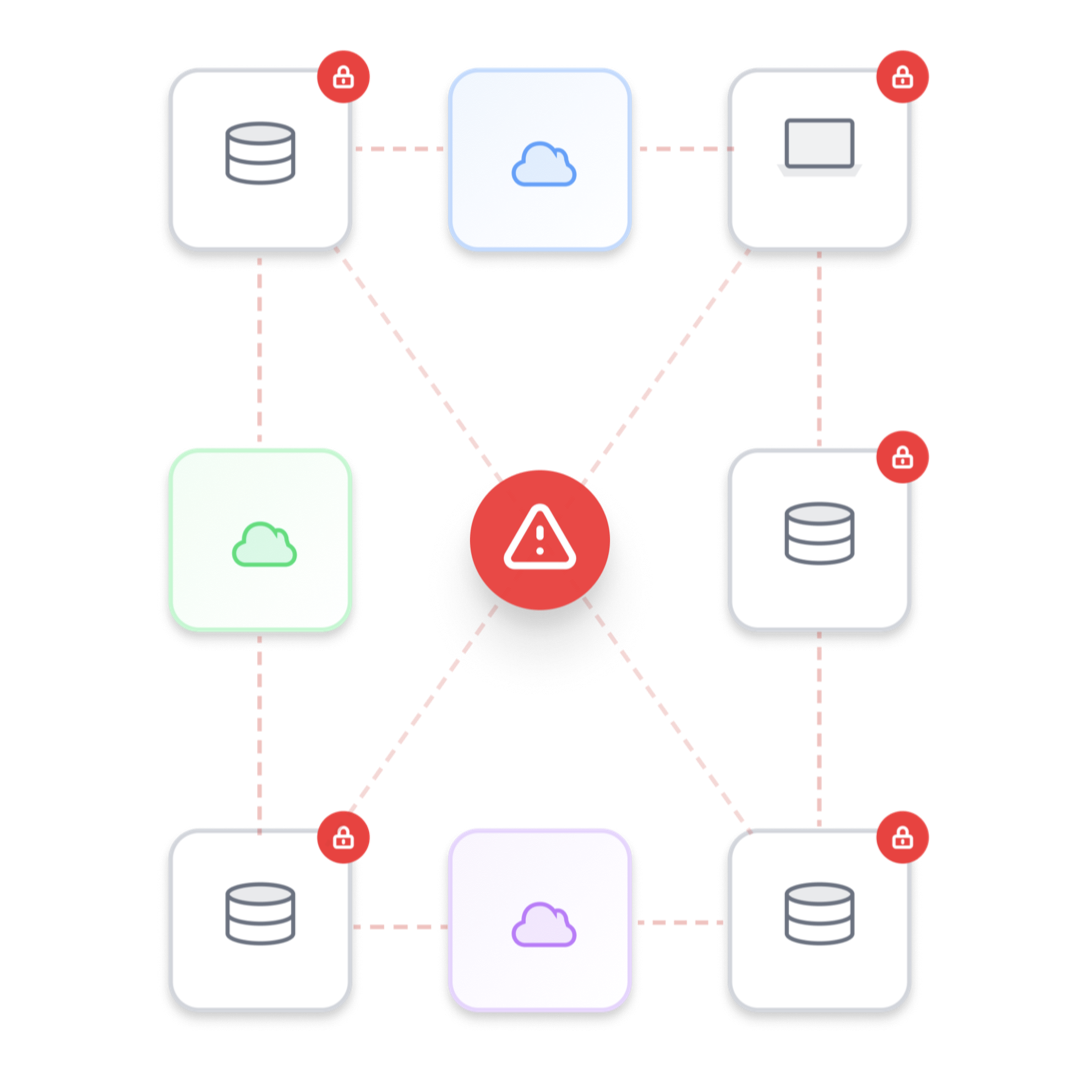
Most multi-location brands have more customer data than they realize. The problem is where it lives. POS transaction records sit in one system. Loyalty app data lives in another. Email engagement metrics are in a third tool. In-store behavior at each location exists in isolation. When none of these systems talk to each other, there's no single customer view, and every campaign defaults to guesswork.
The practical consequence is an over-reliance on blanket discounts and generic promotions. When you don't know that a guest visits twice a week for lunch and spends above average, you send them the same 20%-off coupon you send everyone else. You're eroding margin on your most loyal customers while doing nothing to address the ones who are quietly drifting away.
Inconsistent messaging across locations
Messaging drift is almost inevitable without central governance. Local managers run their own promotions. Email lists are maintained separately per location. There's no central logic governing what gets communicated, to whom, or when. The result is a brand that looks and feels different depending on which location a customer walks into or which SMS they receive.
This inconsistency erodes trust faster than most operators recognize. When a customer gets a "come back, we miss you" offer from Location A while actively dining at Location B, the disconnect signals that the brand doesn't actually know them. That feeling compounds over time into churn.
The personalization ceiling
Without unified data, personalization hits a hard ceiling quickly. Every customer gets the same offer regardless of visit frequency, spend history, or behavioral signals. A guest who visits four times a month receives the same communication as someone who hasn't been back in 90 days. The cost isn't just wasted incentives, it's the churn you can't see coming because you have no early warning system.
Industry data consistently shows annual customer churn in multi-location restaurant chains running as high as 45 to 70 percent. A significant portion of that loss may be preventable with the right behavioral signals and the right timing.
The multi unit marketing channel mix that drives consistent growth
High-intent vs. awareness channels: knowing which to prioritize
Not all channels convert equally, and this matters more when you're managing marketing across dozens of locations. The conversion hierarchy is consistent: high-intent channels like branded search, organic SEO, and loyalty re-engagement outperform interruptive channels for direct revenue impact. Meta and programmatic advertising are awareness tools, treating them as conversion channels inflates expected returns and wastes budget.
For a 50-plus location brand, the most dangerous mistake is spreading paid media dollars too thin across every market trying to cover everything. Concentrate acquisition spend where purchase intent already exists, and use awareness channels for retention and upper-funnel nurturing. That allocation discipline alone separates efficient portfolio-level marketing from expensive noise.
Local SEO as a portfolio-level asset
For multi-unit brands, local search is not a per-location problem, it's a system that compounds in value as you scale. Consistent NAP data (name, address, phone number) across every location, well-optimized Google Business Profiles, and location-specific pages on your website contribute directly to portfolio-wide discoverability. Local SEO is frequently among the highest-ROI channels that multi-unit marketers underinvest in, largely because the results are slower and less visible than paid media.
A brand with 80 locations that treats each Google Business Profile as a live marketing asset, responds to reviews, and publishes location-specific content is building a compounding search advantage. A brand treating those profiles as a one-time setup task is leaving qualified, high-intent traffic on the table every day. The same logic applies to property marketing strategies for multi-site operators managing apartment portfolios or mixed-use developments, consistent local search signals across every property page drive discoverability at scale.

Listen to our absolute breakdown of how multi-location brands build a compounding local search advantage without wasting paid media spend.
Paid and owned channels: when each earns its place
Paid social performs best for awareness and retargeting, not direct conversion. Email, SMS, and push notifications, when triggered by behavioral signals rather than a broadcast calendar, consistently outperform scheduled campaigns on conversion rate. The difference is context: a message triggered by 45 days of inactivity arrives when the customer needs a reason to return. A Tuesday newsletter arrives when the customer is busy.
Behavioral-triggered messaging is substantially more effective when a unified data layer sits underneath it. Without connected systems, you can't detect that 45-day gap in the first place, and the intervention window closes before anyone notices.
Your customer data is fragmented by default: here's how to fix it
What a unified customer intelligence hub actually looks like
A Customer Data and Engagement Platform (CDEP) is meaningfully different from a standard CRM or a standalone loyalty tool. A CDEP treats disparate transactional touchpoints as a core business driver, consolidating POS transactions, app behavior, loyalty activity, online ordering history, and CRM data into a single customer profile available across every location. The operational result is that you stop building campaigns from exported spreadsheets and start building them from live behavioral intelligence.
Qubriux's QubCore infrastructure is designed to do exactly this: connecting every customer touchpoint, POS, kiosk, app, loyalty program, and online ordering, into a single hub that surfaces both chain-wide trends and individual location insights simultaneously. That dual visibility is what turns data from a reporting artifact into a revenue tool.
Of baseline corporate revenue among high-growth enterprises is generated directly from configured scaling personalization mechanics compared to slower-growing market competitors.
Source: McKinsey & CompanyThe difference between having data and using it
Many multi-unit brands technically have the data. They just can't act on it because it lives in disconnected tools that require a marketing manager to manually export, reconcile, and reformat before anything useful happens. By the time the data is ready, the behavioral window has closed. The customer who showed early churn signals three weeks ago has already stopped visiting.
Autonomous AI execution changes this completely. Qubriux's QubMind engine is built to identify behavioral signals, visit frequency dropping or spend declining, and execute engagement decisions without waiting for a human to build a campaign. the system is designed to act in the window where intervention actually works.
Dark coding architecture for martech margins
A fragmented stack isn't just operationally inconvenient, it carries a direct financial cost. Duplicate tooling, manual data reconciliation hours, and attribution gaps that prevent you from proving marketing ROI to a CFO all add up. Consolidating into a unified CDEP reduces those costs while simultaneously improving the quality of every campaign the platform runs. It functions as both a cost reduction and a revenue acceleration lever in the same decision.
Personalization and automation at scale
Behavioral segmentation: moving beyond demographic targeting
Segmentation based on actual purchase behavior, visit frequency, average spend, last visit date, channel preference, outperforms demographic or list-based targeting by a meaningful margin. Utilizing modern AI personalization systems to drive behavioral segmentation shows reductions in cost per conversion of roughly 20 percent, with overall marketing ROI improvements in the range of 10 to 44 percent compared to generic promotional approaches, though results vary significantly by brand maturity and baseline. The underlying logic is straightforward: relevant offers convert, irrelevant ones erode margin.
In practice, this means creating distinct cohorts: high-frequency guests who deserve recognition and early access, at-risk guests who haven't visited in 45-plus days and need a win-back trigger, and new customers who haven't yet formed a habit. Each cohort needs a different message, a different incentive, and a different channel. Treating them the same is where most loyalty spend disappears.
Automated win-back campaigns and churn prevention
A behavioral win-back campaign has three components: the right trigger, the right incentive, and the right channel sequence. For restaurant brands, the most effective trigger is inactivity at the 30, 60, or 90-day threshold, escalated earlier for high-value guests. The incentive should be margin-aware, not just the maximum discount. Across restaurant brands in practice, dollar-off offers frequently outperform percentage-off, and non-monetary perks like bonus points or a free item can work equally well without the same margin impact.

Winback Campaigns: Everything You Need to Know to Prevent Churn
The sequencing that consistently performs best starts with a low-friction "we miss you" message, escalates to a personalized offer tied to prior behavior, and closes with a time-limited incentive before suppressing the contact. Once the logic is built, it runs on autopilot. Qubriux's win-back model is designed around this framework, identifying churn risk and triggering engagement 30 to 45 days before the guest fully disengages, targeting the intervention window where recovery rates are highest.
Omnichannel execution without the chaos
Delivering personalized messages across email, SMS, WhatsApp, and push without over-communicating or creating conflicting offers is an orchestration problem, not a creative one. Frequency logic, channel preference detection, and AI-driven sequencing keep communication relevant without overwhelming the customer. The practical result is that each guest receives the right message through the channel they actually engage with, at a frequency that feels like attention rather than noise.
Multi-location marketing and local SEO: applying the framework to property portfolios
The same data unification principles that drive performance for restaurant and retail chains apply directly to apartment portfolio marketing and multifamily marketing. A property management group running 30 or more communities faces the same fragmentation problem: resident data lives in separate property management systems, leasing inquiries aren't connected to retention activity, and renewal campaigns default to one-size-fits-all outreach.
Multi-unit property marketing at scale requires the same infrastructure: a unified resident profile, behavioral triggers based on lease cycle signals, and location-specific SEO for each community's Google Business Profile. Multi-site marketing for properties that treat each building's digital presence as a live asset, not a one-time listing, consistently outperforms portfolios running static profiles. The framework is identical; only the triggers and incentives change.
The KPIs that actually move a multi-unit brand forward
The metrics worth tracking at the portfolio level
The core dashboard for a multi-location brand should track repeat visit frequency, customer lifetime value (CLV), cost per acquisition (CPA), churn rate, and campaign incrementality. Email open rates should not be a primary executive KPI, they measure attention, not revenue, and optimizing for them pulls marketing teams away from the metrics that connect directly to margin and growth. Cost-per-lead benchmarks, which run from $20 to $65 in Tier 1 markets, are only meaningful when measured against CLV. A $50 lead cost that generates a $600 CLV is a good investment. The same cost generating $90 CLV is not.
Incrementality: the metric most operators skip
Incrementality is the revenue that happened because of a campaign, not revenue that would have happened anyway. Measuring total lift from a loyalty campaign systematically overstates ROI because it includes transactions from customers who would have visited regardless. Control group testing reveals the true number: what changed because the campaign ran versus what the counterfactual baseline would have been.
This measurement shift is what earns credibility with finance stakeholders. When a loyalty program investment is justified by attributed revenue, the CFO sees a correlation. When it's justified by incrementality, the CFO sees causation. That distinction determines whether the program gets protected or cut in the next budget cycle.
Location-level vs. chain-level reporting: you need both
Chain-wide trends reveal portfolio health. Location-level analytics reveal which specific units are underperforming on engagement metrics and why. A unified platform makes both views available simultaneously, and acting on location-level signals creates compound improvements across the portfolio. If one location has a higher churn rate than comparable sites, that's a signal worth investigating, not a number to average away into the chain-wide metric.
Build the system, not just the campaign
Multi-location marketing at scale is a systems problem. The brands growing visit frequency and CLV in 2026 have unified their customer data, replaced manual campaign building with behavioral automation, and shifted from discount-heavy tactics to margin-aware personalization. These aren't aspirational capabilities, they're operational decisions that require the right infrastructure underneath them.
A platform like Qubriux is built to serve as both the technology and the strategic partner: QubCore unifies the data, QubMind executes autonomously, and dedicated human success partners work alongside your team to drive measurable outcomes at both the chain level and the individual location level. That combination of software and embedded expertise is what makes the system scale without adding headcount.
The most useful next step isn't evaluating platforms. Start by auditing your current stack against the framework in this article and identifying the single biggest gap holding your brand back. Is it fragmented data? Generic campaigns? Missing incrementality measurement? Start there. Successful multi unit marketing is built on a unified data system, not one-off campaigns, and knowing exactly what's broken is the only honest starting point for fixing it.